The recent unrest across the country in response to racial injustice has driven needed conversations about equality, privilege, and local history here in the Ag Reserve. While the conversations are sometimes uncomfortable, they are incredibly important. Personally, I’ve been pleased to see the increased community-wide examination of Ag Reserve history, as I think improved understanding of our past will help us think about and navigate potential hurdles towards the community we desire in the future. This is not to say that our community isn’t already great, but that it could always be better – more inclusive, more informed, and kinder.
Personally, it’s been eye-opening to see some town members express surprise at revelations of our past. For example, it seems clear that many didn’t realize White’s Ferry is named after confederate Colonel Elijah V. White, a hometown boy who crossed the Potomac River in 1861 to fight for and lead a confederate cavalry unit. But upon further reflection, unless you have an interest in studying local history, these details are not openly discussed very often. This is why I think there’s a real opportunity to educate the community in this moment of deeper reflection, curiosity, and discussion.
Before 1864, when Maryland abolished slavery, the use of enslaved labor on land now within the Ag Reserve’s boundaries was incredibly prevalent. In the election of 1860, Abraham Lincoln received zero votes here in the Medley District (the old voting district which covered most of northwestern Montgomery County). While the numbers here aren’t completely clear, we know from the 1860 census of Montgomery County that 30% of the county’s population was enslaved. A significant percentage of this enslaved labor worked in the fields we drive past each day and built the now historic homes I spend so much time thinking about.
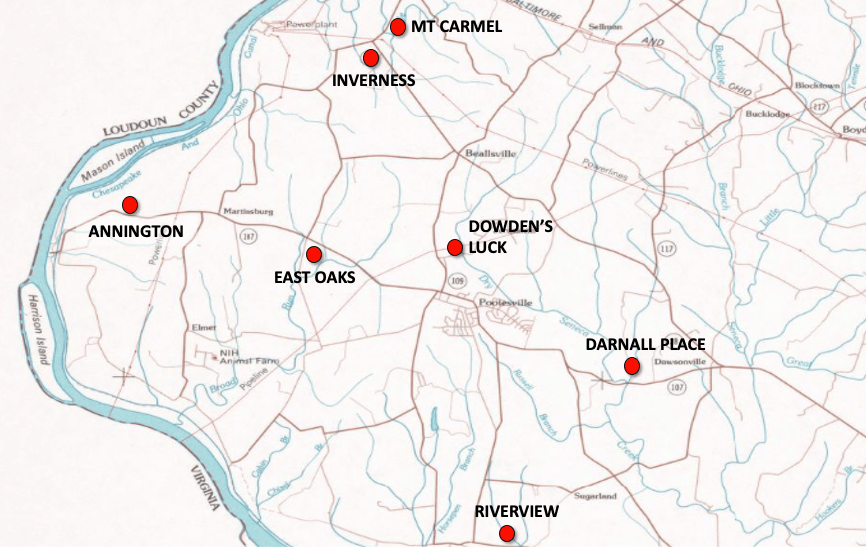
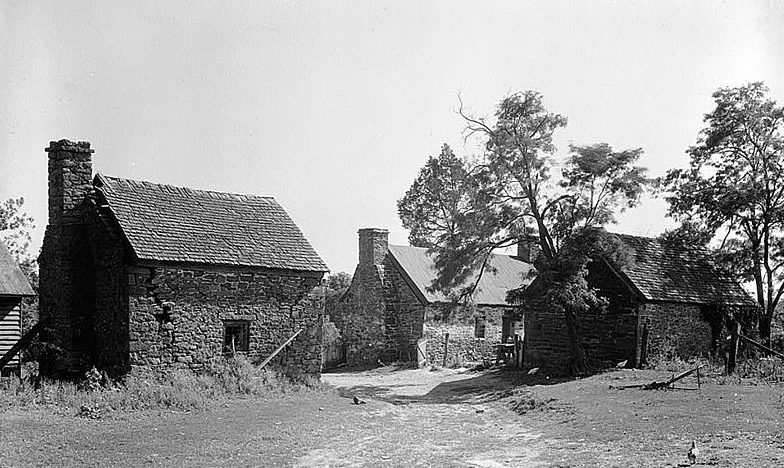
One historic asset here in the Ag Reserve that I believe gets far too little attention is the significant number of enslaved quarters that remain standing, largely in the shadows (literally) of these grand historic homes. While the depiction of slavery in film typically shows large southern plantations with multiple hut-type structures made of wood (think Gone With the Wind or North and South), the reality of slavery here in the Ag Reserve was different. Very few property owners owned more than 10 slaves, and such, enslaved housing was normally satisfied with either a loft over the kitchen wing of the home or with a single structure behind the main home. While some of these structures were likely built with logs, the structures that remain with us today were built with brick or stone (typically using left over material from the building of the main home). Simplistic in plan, the enslaved quarters usually consist of a single room with a fireplace. On a number of properties here in the Ag Reserve, the enslaved quarters are two separate living areas divided by an interior wall – an indicator of multiple enslaved families on the property.
It’s difficult to find the names of the enslaved peoples who lived in these homes (a work in progress), but census records and wills do provide some details. For example, we know that in 1830 there were 15 enslaved peoples on Darnall Place.
While all of the enslaved quarters in the Ag Reserve lie on private property and are not publicly accessible to view, I hope the ability to organize a tour of these historic landmarks will become available at some point in the near future. It’s critical that we protect, preserve, and learn from these structures. Despite being small and simplistic in design, the remaining enslaved quarters represent an incredibly important component of Ag Reserve history.
Interested in seeing more pictures of enslaved quarters here in the Ag Reserve? They can be found in the Property Explorations section of this site.

