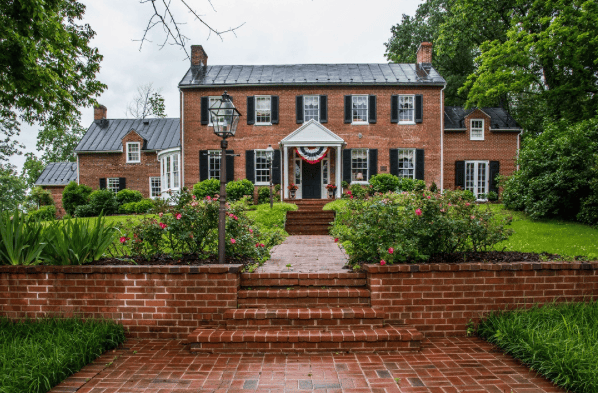
As Henry Young looked down from his bedroom window at the East Oaks Estate in early 1863, you have to wonder how he felt about the Union Army’s encampment- known as Camp Heintzelman – spread across a good portion of his yard. As a slaveholder with family members actively fighting on the side of the confederacy, it seems likely that he was not thrilled with his union guests. Based on letters from soldiers at the camp, the scene was one of great activity: units drilling across the fields, soldiers singing and playing cards late into the night, and countless fires burning twenty-four hours a day. A lot had changed since Henry’s father, also named Henry (Sr.), built East Oaks in 1829 on a quiet plot of land given to him by his father, Ludwick.
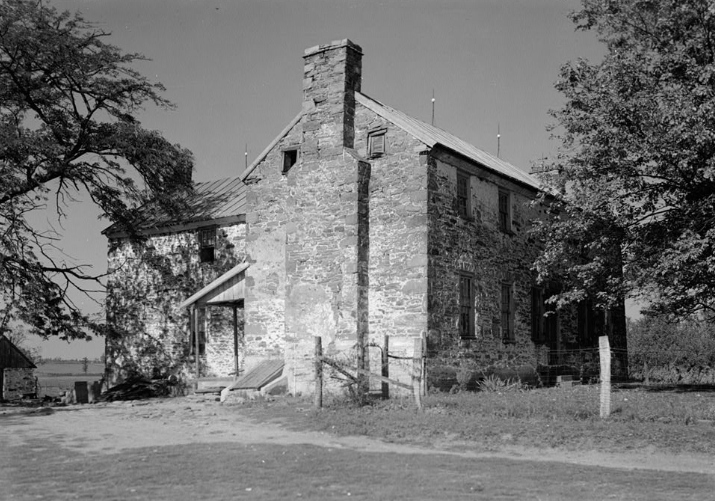
In 1812, Ludwick Young moved his family from Hagerstown to land between Poolesville and White’s Ferry (then Conrad’s Ferry) known as Killmain. Ludwick and his wife Mary Catherine made the move with 6 children, ranging from 3 to 22 years old. Moving into a large stone home that had been built in the 1750s (and sadly demolished in the 1950s), the Youngs quickly got to work farming. In 1820, Ludwick died at the age of 55 and left parcels of land to each of his children. Henry Sr., Ludwick’s second oldest son, received the rights to 255 acres of the Killmain survey.
The Youngs were already a prosperous family (as is evident by the amount of land they owned), but in 1823 when Henry married Margaret Chiswell, from the wealthy Chiswell family, he solidified the family’s financial position for the next few generations. With this combined wealth, Henry Sr. had his East Oaks Estate built in 1829. A classic example of the popular federal architectural style of the time, East Oaks bears striking similarities to two other large plantations in the area: Inverness (built in 1818) in Dickerson and Annington (built in 1813) near White’s Ferry. There’s no coincidence here: Margaret’s sister lived at Inverness and her brother-in-law’s brother lived at Annington. As a result, Henry and Margaret undoubtedly spent a great deal of time in both homes and when building East Oaks, looked to the same builder of these grand estates.
By all accounts, Henry Sr. was a successful and innovative farmer, just as his father Ludwick had been. The 1850 census indicates that Henry’s estate was worth $12,500 (wealthier than 90% of farmers in the Medley District at that time) and that he owned 10 horses, 7 milk cows, 41 sheep, 69 pigs, 33 cattle, and was growing a variety of grains (wheat, corn, and oats) and vegetables (potatoes, beans, and peas) on his land. Today East Oaks is on the market with an asking price of 3.8 million dollars, a 31,000% property value increase over the 169 years!
One mystery that remains to be solved: where are the early members of the Young family buried? We know from historic records that there is a Young Family cemetery somewhere near where the old stone home once stood. But sadly, the records of the cemetery’s exact location have not been located. I believe the site is somewhere near the intersection of White’s Ferry Road and Edward’s Ferry Road, but few further details are known. Perhaps a reader of this article knows more!?
As always, please follow along on facebook @historicagreserveproperties.

