Shortly after the conclusion of the Civil War, free blacks, many of whom had been previously enslaved, purchased land to establish the Martinsburg community (a few homes and shops already existed in the area, but the community really took shape following the war). One of the first structures built by the community was a small church, which sat off of Martinsburg Road (near the current site of Calleva Farm). Around the church a community cemetery was developed, serving as the final resting place for many of the Martinsburg community’s early leaders and residents.
In the 1870s, the congregation used logs and oxen to move the church from its initial location down to the current site at the intersection of Martinsburg and White’s Ferry Roads (approximately one mile). While much of the community activity was centered around the intersection of these roads, the initial cemetery remained active through the 19th and much of the 20th centuries.
Over the years, much of the cemetery has become overgrown with vegetation, as most of the Martinsburg community has moved out of the area and no longer present to maintain the site. Recognizing the cemetery’s significance, a small group of local leaders and preservationists (Chuck Copeland, Link Hoewing, Glenn Wallace, and myself) recently worked to organize a clean-up of the site.
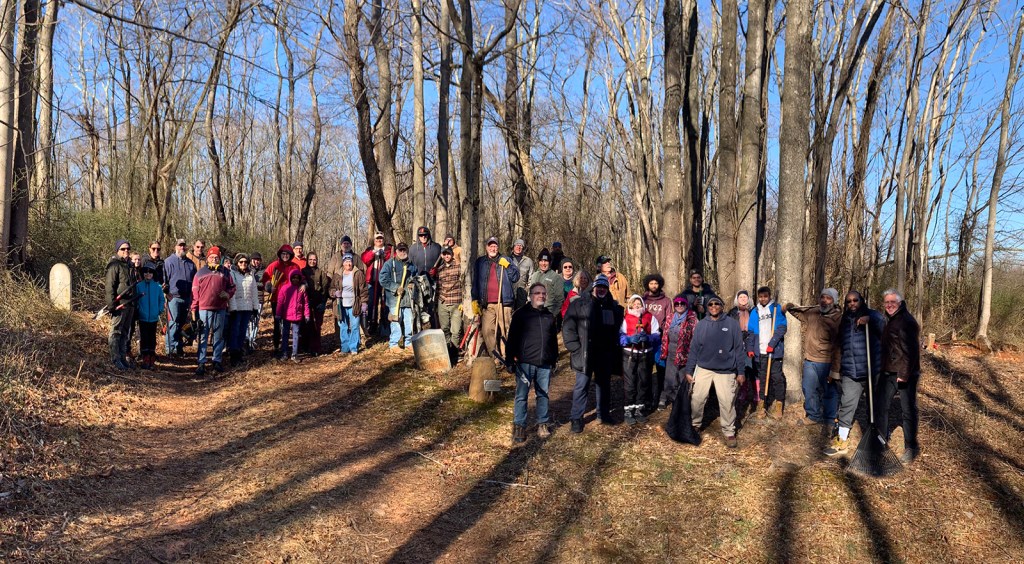
On the morning of 18 February, approximately 40-50 volunteers gathered in the historic Martinsburg Church at the Warren Historic Site. Pastor Chuck Copeland, who has deep ties to the Martinsburg Community, provided the group with a wonderful historic overview of the community and the cemetery. Following the remarks from Chuck (and donuts and coffee provided by Link), the group caravanned the approximate one mile trip from the church to the cemetery.
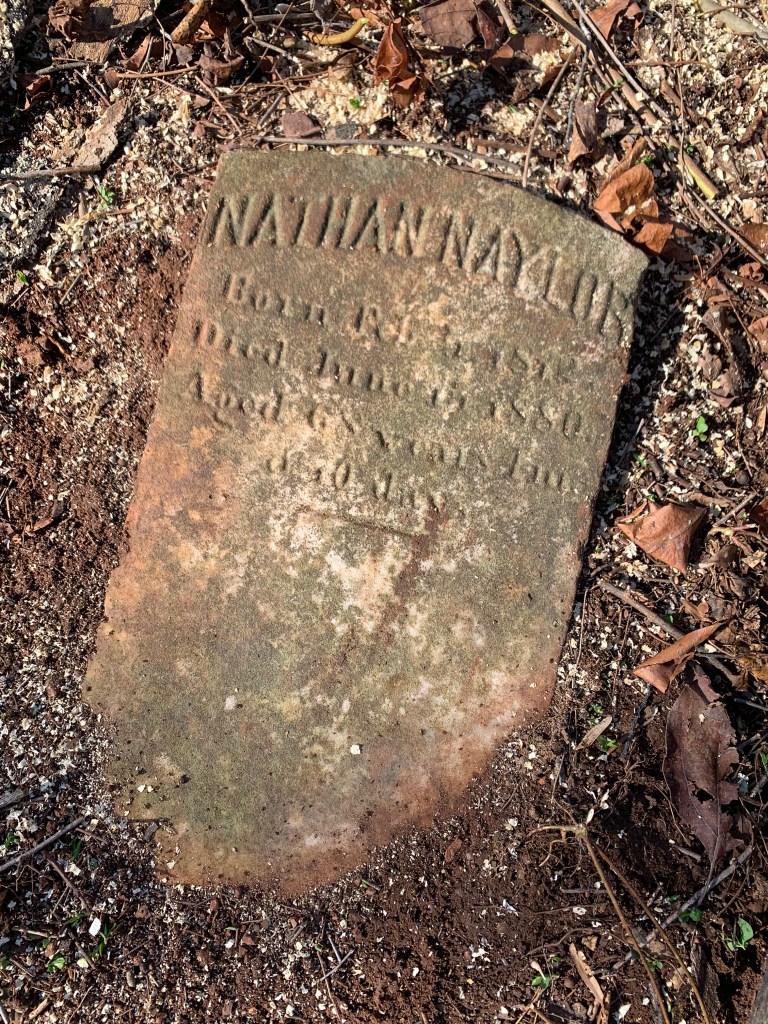
Despite years of vegetation growth over the site, the large group of volunteers – yielding chainsaws, hedge trimmers, rakes, shovels, and brute force – was able to make significant progress in clearing the site. As the vegetation was cleared away, burial markers – frequently simple carved sandstone – emerged from the brush, seeing light for the first time in decades. One notable stone uncovered marked the resting place of Nathan Naylor – one of the founders of the Martinsburg Community and thought to have been one of the largest African American landowners in the county in the late 1800s.
Overall, the clean-up was a huge success. Not only did more of the site get cleared than the organizers expected (thanks to the great volunteer turnout!), but many of the volunteers noted that it was a moving and meaningful experience. The site, which is the resting place for many individuals who likely started their lives enslaved, is certainly sacred. As a next step, Glenn Wallace will lead efforts to begin mapping the cemetery and working to better understand the names and stories of those buried there – a difficult task when you consider that many of the stones are unmarked sandstone.
A special thanks to the many volunteers who spent their day hard at work to clear and ultimately preserve this very special historic Ag Reserve landmark. Additionally, thanks to the Markoff Family for participating and providing some heavy equipment that made moving fallen trees possible.

