One of the many benefits of the undeveloped Ag Reserve land is the ability to observe a landscape today that has experienced little change from how it looked two hundred years ago. On multiple occasions I’ve peered out of a historic home’s attic window and thought to myself, “this view is the same as the day the home was built.” But still, I often find myself wondering what it actually felt like to be on this land long ago. How different were the people who lived here in the early 1800s from us?
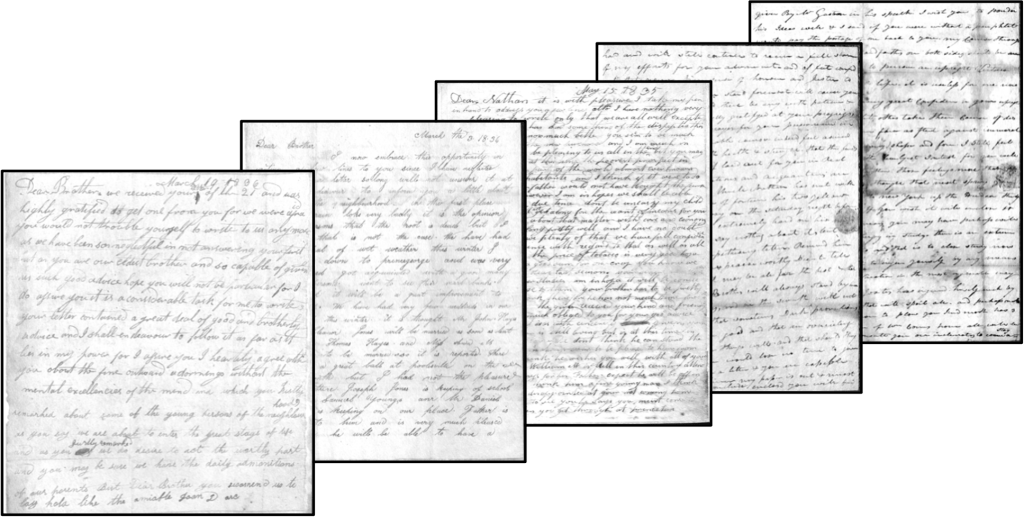
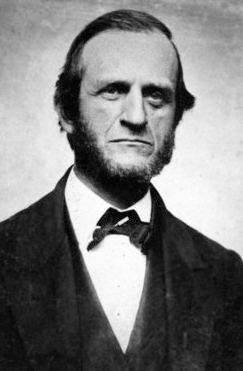
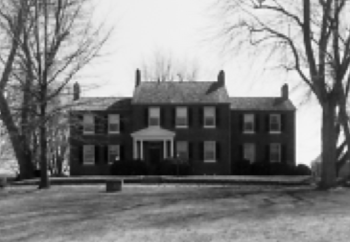
About a year ago, while digging into the White Family (a prosperous family in the Reserve throughout the 19th century), I came across archive holdings at Duke University of letters written to Nathan Smith White (1817-1888) from friends and family throughout the 1830s. Nathan was the first-born son to Benjamin and Rachel White, prosperous farmers who built the Inverness estate near Dickerson in 1818 (an amazing old home that is still with us).
The letters, written to Nathan primarily while he was a student at Princeton University from 1833 to 1837, paint a vivid image of life on this land two centuries ago.
One topic of consistent discussion in the correspondences is local weather, which makes sense given the White’s family’s source of income. Throughout the 1830s it seems clear that Nathan’s father, Benjamin, consistently tried to grow tobacco but was frequently frustrated by the lack of cooperative weather. We know that many of the earliest settlers in the Ag Reserve came to this land in the later part of the 1700s from areas around the Chesapeake in search of fresh soil to plant tobacco, but by 1800 wheat was the crop of the day. So it’s fascinating to see evidence of Benjamin continuing to try his luck with the crop three decades into the 19th century.
While the letters from Nathan’s mother and father are more serious in tone and substance – such as Benjamin offering his college freshman son advice on how to handle expenses and maintain study habits in 1833 – the letters from Nathan’s brothers and sisters are more informal, frequently highlighting the goings on in the “neighborhood” – an often used reference that seems to apply to the entire area around Dickerson and Barnesville. In January of 1835, we see correspondence from Nathan’s brother of a large snowstorm, writing, “The snow is now knee deep and our work remains at a complete stand…The ladies and gentlemen are slaying about in every direction but have not yet favored us with their company.” (The incorrectly spelled “slaying” in this case is a reference to being pulled by horses in the snow, not some type of nefarious activity). And for Easter in 1836, Nathan’s sister writes to him that “the young people of the neighborhood are going to take an excursion on the mountain at easter of which I expect to be one among them,” a clear reference to Sugarloaf Mountain.
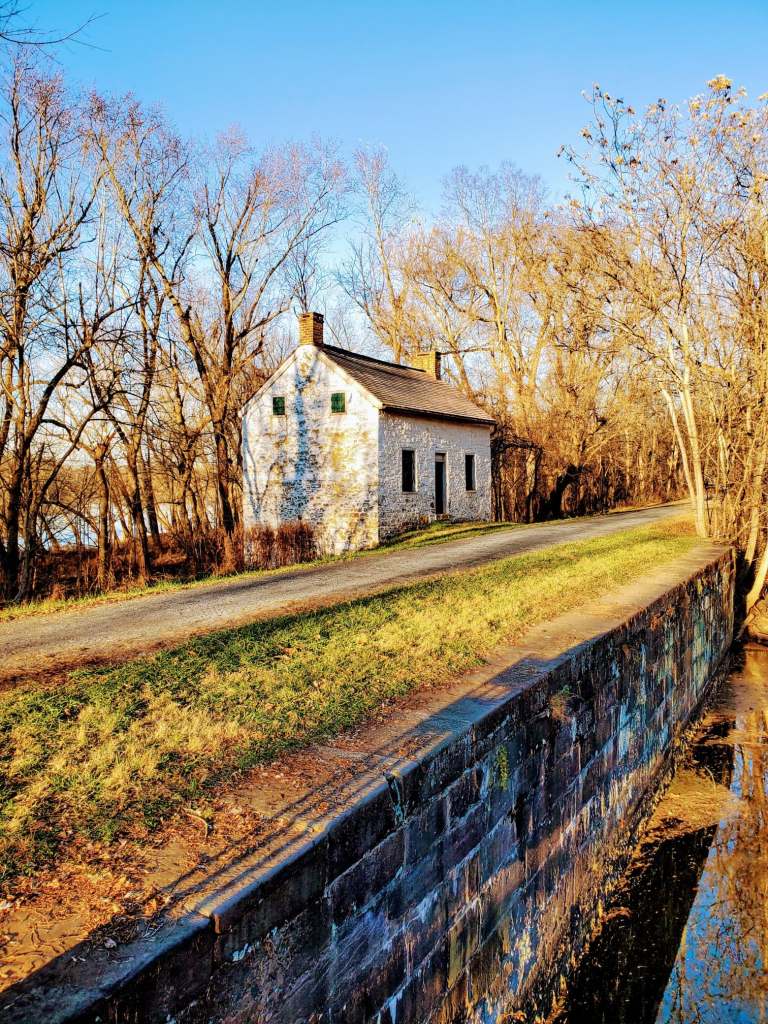
My favorite letter to Nathan comes from his father in September of 1837, who provides Nathan with advice on how to return home after graduation from Princeton. In the letter, Benjamin states, “you had better come on to the Point of Rocks with your baggage and we can send them for it. You could walk down the tow path or get on a boat and come down to lock no. 27 opposite us – and then come home. It is a plain way – the lock keeper can assist you or we must send for you.” What’s really amazing about this letter is the extent to which you could fairly easily still follow these instructions today, albeit that it is around a nine-mile walk and you would need to skirt around the perimeter of the Dickerson Generating Plant.
Following Nathan’s graduation from Princeton, he went on to Yale Law School before opening his own law practice in Charles Town, WV (it was then still Virginia) in the 1840s. A successful lawyer, Nathan had two children with his wife, Fredericka. One of these children, Benjamin (named after his grandfather), would fight and die as a confederate soldier in the battle of Chancellorsville on May 3, 1863. It’s interesting to consider that Nathan’s grandfather is believed to have fought in the Revolutionary War in a bid to help create the nation while his son fought in the Civil War to break it in two.
Nathan and Rebecca, as well as their children, are buried at the Mt. Zion Church cemetery in Charles Town, WV.
For me, the biggest takeaway from these letters is the notion that while times have changed and the world looks very different from the 1800s, the core goals, frustrations, satisfactions, and concerns of moms and dads, brothers and sisters, friends and families have largely remained the same. Hard times pass, the sun rises each morning, and the view from Sugarloaf – largely unchanged from the 1830s – still inspires the occasional hike to the summit.
If you’d like to view the recorded presentation I recently gave on this topic, check it out here: https://www.youtube.com/watch?v=NOawydkJd8M&t=6s

