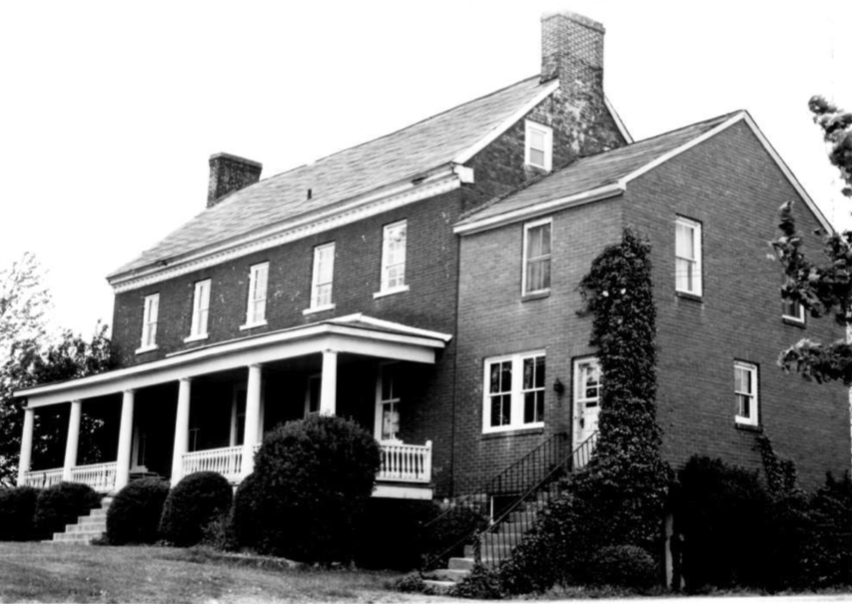
There’s something about standing in an abandoned or vacant old house that summons a range of feelings. On one hand, there’s a certain sense of sadness at seeing a home that was once occupied by a family now empty. On the other, there’s a feeling of hope that the home will again be occupied in the future. A hope that the dining room will have more thanksgiving dinners, children will ride the stairway bannister again, and loving inhabitants will again tend to the yard. When you stand in the foyer of Joseph White’s now empty home, these competing feelings are certainly present.
In 1824, Joseph White, a member of the prominent and local White family, married Mary Collinson Gott, the daughter of a wealthy plantation owner a few miles away. Joseph had been given a tract of land, referred to in survey records as “Wolf’s Cow,” by his father and had begun work on a new home around 1822. Completing his federal-style home around the same time as his wedding, Joseph and his new bride moved in and went to work farming the land.
Historic records seem to indicate that Joseph was good at his trade and became a relatively prosperous farmer. In fact, Joseph was one of the founding members of Medley District Agricultural Society, which served as forum for local farmers to share agricultural techniques and knowledge. As was the case on most farms in what we now consider the Agricultural Reserve, Joseph did possess multiple slaves (we know of at least four) to assist in this work. Unfortunately, we don’t know much more about these individuals aside from their names, which were listed in Joseph’s father’s will: Matildy, John, Peter, and Henry.
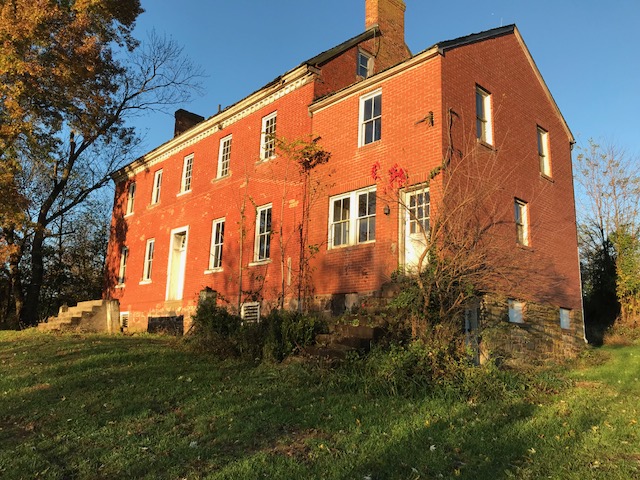
The home itself has a fairly simple floorplan that is replicated in other federal homes in the area. But it’s in the details that Joseph White’s home really shines. In the 1980s the county’s historic preservation planning staff noted that the house is architecturally significant for the area because of a few features, to include the glass fanlight window over the front door, the finely crafted roofline moldings, and its side-gabled roof. There’s also an interesting main staircase that was unquestionably beautiful in its heyday.
Perhaps one of the more interesting aspects of the home’s history is that in the fall of 1862 when the Civil War was beginning to heat up and the conflict was coming closer to the Medley District, two of Joseph and Mary’s three sons crossed the river to fight for the confederacy. Fighting under the command of their cousin, Col Elijah White (as almost all local men in the area who fought in Civil War also did), both sons appear to have been captured and released at some point during the war before eventually returning home to get on with their lives.
I have no sympathy for the confederate cause, and I’m eternally grateful that the Union was able to eventually crush the rebel army, but standing in the doorway of Joseph’s home, I can’t help but wonder what it was like to be in his shoes 157 years ago. What did those last goodbyes look like as the boys headed off to war? What was it like to have the boys return home defeated after the war and attempt to return to some semblance of a normal farming life?
There are plenty of old homes in the Agricultural Reserve where mothers and fathers hugged their sons one last time before heading off to the Civil War, but there’s something about the Joseph White house that seems to bring the feelings of absence and longing to the surface. Perhaps it’s because the home sits abandoned and empty, giving off the sense that it’s waiting for someone to return (it’s now owned by the county who has bolstered its structure but has little funding with which to do much more). Or maybe it’s because the views from the front windows haven’t changed in the 195 years since the home was built, and it’s easy to imagine Mary looking out these windows and waiting for her boys’ uncertain return.
The home remained in the White Family for more than 150 years before being sold and falling into disrepair in the 1980s. Thanks to the efforts of local preservationist and Historic Medley District member Mary Kephart, the home was added to the county’s list of historic homes and saved from demolition. Today, it sits quietly on its rock foundation with an interesting past and a hopeful future.

