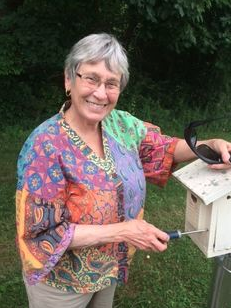
Interviewer: Elena Victoria
Date: March/April 2020
Tell me about your family background? How did you end up here in the Ag Reserve? What type of work/industry was your family involved with (if they were in the Ag Reserve)?
When I was 9, I lived in Arlington, Virginia. My father worked for the Washington Times Herald and my mother was a stay at home mother with a huge garden. In 1951, my father married his boss at the paper, Ruth McCormick Miller. She had an Arabian horse farm at the corner of what is now River Road and the Beltway. She expanded her farm and bought lots of land in what is today’s Agriculture Reserve. Thus, I had been coming out to this area since I was a child. After the divorce, my mother moved us to Long Beach, California, where we lived until she was married again. We then moved to a ranch in Montana. My mother was raised on a farm in North Carolina and many relatives had migrated to Montana during the Homestead Act.
After two years of living in Montana, my stepfather committed suicide so we returned to Long Beach for the school year. My brother and I would fly back to DC and be with my father’s family twice a year. We would go back to the Montana ranch in the summers, so I had exposure to two types of agriculture. The ranch in Montana was diversified: wheat, alfalfa, cattle, pigs, chickens, milk cows, and a huge garden. The extra produce from the garden was canned for winter use. The Montana ranch also had the only water for miles around. There was an artisan well that seemed to know no end. Farmers drove in all day and filled up a huge tank and my job was to collect the money for the water. One silver dollar for hundreds of gallons of water, which makes for an interesting comparison to our bottled water prices today.
Bazy, my stepmother, ended up owning about 1,800 acres in what is today’s Ag Reserve. When the Beltway came close to the farm on River Road, she built a house out here on White’s Store Road and sold the River Road farm to the Marriott Company, who planned on building their corporate headquarters on the land. Local neighbors fought this effort, and today that land is a housing development called Al- Marah after the Arabian horse farm. All the roads are named after different horses that were raised on the farm. My stepmother gave some land for the Primary Day School and that school is still there off of River Road and Royal Dominion Drive. Royal Dominion was one of her horses.
The new Al-Marah Farm (in Barnesville) was a very busy farm employing quite a few people. The Magaha family (both Archie and Wilson) was a big part of that community. Bazy had about 200 horses on the farm and she raised much of her hay needs on the crop land. She held lots of horse events and many friends of the breed moved out to the area to be closer to the main farm: the Goekes, Alveys, Waddells, and Neals are a few that I can recall. She bought the land around what is now known as Conoy Road and built the Conoy Horseback Riding ring. She had hoped that people buying land at Conoy would all be horse riders and would enjoy the old house on the land as a clubhouse as well as the indoor and outdoor riding ring.
My mother’s third husband died in 1959, but we stayed on in Long Beach. After attending college and graduate school to get my American History Teaching Degree, I taught near Long Beach. But, in 1964, my brother moved back East to Maryland and in 1965 my mother decided to move back to Arlington to be near two sisters. I decided to go to graduate school at the American University in Beirut, Lebanon. My time in the Middle East was cut short by three family weddings, my stepsister, Kristie Miller, my brother, Garvin Tankersley, Jr. and my mother was optimistically going for her fourth marriage. I returned to split time between my mother’s home in Arlington and Al-Marah near Barnesville. Bazy had just built the house on Whites’ Store Road and had sold the farm down county. After the family weddings, I planned on returning to California to teach as the salary for a secondary school teacher was much higher in California. However, Bazy encouraged me to stay in DC for a year and work. Everyone said an American History teacher should work on the Hill, so I took their advice planning to “just be there for a year.” I lived in DC in an apartment at the Fairfax Hotel which Bazy and Dad had already rented to use when they came to DC and didn’t want to drive back to Barnesville.
While working for Nebraska’s Senator Hruska, I met Rex Sturm and we became engaged. After our wedding in 1967 and living in DC for nine years, Rex had “Potomac Fever” and we moved back to Maryland in May of 1968, living on one of the houses on Bazy’s property. Rex became licensed to practice law in Maryland and joined the law firm of R. Edwin Brown. Today, you can see the law firm’s sign of Brown and Sturm at the corner of Route 28 and Jefferson Street in Rockville. We bought our small farm on PeachTree Road from Bazy in 1969 and moved into our house in March of 1970.
We naturally raised registered Arabians (and a 4-H steer most years), and were very involved in equine activities. The Arabian Horse Foundation had built the Arabian Horse Museum on Peach Tree Road before we moved back to Maryland. Between 1967 and 1973, our family grew to three children of our own and we were well on our way to 14 horses. Rex and I were both involved with promoting the breed through holding offices in the Blue Ridge Arabian Horse Association and attending the numerous Horse Management Courses put on at the Arabian Horse Museum. There were many horse shows at the Conoy Riding Stables and Show Ring built by Bazy. I was involved in helping run two class A shows, one at Conoy and the other one at the wonderful Montgomery County Fair which was my favorite horse show – because it was 4-H and the judges communicated to each rider in the youth classes what went “right” and what went “wrong”. We used to hold a two-day 50 mile competitive trail ride, open to all breeds, in the 70’s and 80’s that would start at Conoy or Al-Marah. I was very involved in putting that on and only enjoyed riding in it once. The ride was a really beautiful one extending to Sugarloaf Mountain and the land around that special landmark in our community
Describe the Ag Reserve when you were growing up here? Any interesting stories come to mind? Most prominent memory? Contentious issues in the community?
When I was growing up, I always felt driving anywhere out here was so beautiful, and I was lucky to see all the beauty. I was basically a farm girl. My ties to Montana and here kept me grounded. We drove out to the new land that Bazy had bought along Route 28 and my favorite view was Spring Valley Farm. Not sure what the name is today. It is still a lovely farm to drive by and there are many other beauties along Route 28.
I do remember some bad things too. Staubs, at the corner of 109 and 28, was segregated and black people could not come inside and eat; they had to pick up their orders at another window. One memory is seared onto my brain. When I was young, we had a maid from Nicaragua. One time we were out and we all went into Staubs to eat, and they asked us to leave.
The good things about the Ag Reserve in the 50s and 60s was that it was a much more diverse community economically and ethnically than surrounding areas. ( Today, Montgomery County is more diverse ethnically which is wonderful. ) You would drive along and see black families preparing sausage and other things. One of my favorite sites was driving by the Ambush House on Barnesvlle Road. It was a log house filled with lots of children and I enjoyed stopping and seeing them as they got on the bus for school and playing on the weekends on their beautiful land. But since it was without running water and power as were a lot of homes out here, it was my understanding the county offered some kind of public or low rent housing to families that were in this situation. When Bazy first moved out and built the home on Whites’ Store Road, a black woman, Mrs. Turner, lived in a log house in the middle of the woods between White Store and Peachtree Road with no electricity and running water. Bazy offered to build a house for her and give her four acres of land on Peachtree Road in exchange for not living in the log cabin as Bazy was concerned about the fire hazard. She took Bazy up on the offer, and lived there happily for years. I used to enjoy riding back to see the old cabin particularly when the turkey vultures were nesting there. We did not have as many vultures in this area of the county then as we did not have as many deer. Seeing a deer when my kids were growing up in the 70’s was an occasion to have everyone run to the window to enjoy. Now, of course, we are chasing them out of our gardens.
It was easy to live out here and work in Rockville (my husband worked in Rockville)—back then it took only 30 minutes. Driving back from Rockville, the main thing I remember is when you drove along Clopper Road there was a dairy farm, and you had to stop when the dairyman was letting his cows across the road. People didn’t mind stopping. It was delightful. Back then, people used to talk about how Germantown would grow to 85,000 people and we’d laugh!
A black man designed my stepmother’s beautiful barn which was built with four main wings, with dividers around a central circle. These were specially designed to prevent a fire from spreading rapidly.
Fire seemed to be a theme in my family’s life back then. At the main farm, there was a terrible fire killing 11 horses, all visiting mares, waiting to be bred to Bazy’s prize stallions which the police attributed to arson. Arson continued to play a role in my family’s life. Arsonists burned the abandoned home on River Road in 1973 and burned Bazy’s home on White’s Store Road about a year after it was sold. The first fire at Al Marah was set by a disgruntled employee. But the ones at the two former homes were due to some kind of criminal activity, possibly accidental. Fortunately, no one was residing in the two respective homes at the time.
Bazy had close ties to the Saudi Arabian Embassy in DC. The Saudi’s loved Arabian horses and attended some of the promotional races held in the metro area as Bazy’s guests. The Saudi Ambassador at the time was friends with Bazy. After he had heart surgery, he spent time recovering at their home on White Store Road and fell in love with the place. Thus, when Bazy decided to move to Arizona permanently, he put a group together and bought the property. They left the property vacant for a period of time. Prince Bandar (who was featured in the movie Fahrenheit 9/11 by Michael Moore) would come out here a lot and his secret service people would practice shooting their firearms. The FBI would come and investigate what was going on. Prince Bandar went back to Saudi Arabia many years ago and the business owners started thinking about selling the property.
My son was about 6 or 7 when the Saudis built the replacement house after the original one burned down. Mr. Charles Player was in charge of running the place for the owners. He invited us to come and see the house. Logan, my son, came back and said I know what I am going to do when I grow up. “I am going to marry a Saudi Arabian princess!” The house was filled with all sort of arcade type games, so he was enchanted.
This was all in the late 70s and no one had any issues with the Saudis’ buying Al Marah -if they even were aware. But later, the Saudis wanted to build a big Islamic school perhaps over on Partnership Road, and that became a contentious issue for various land use reasons, not to my knowledge prejudice reasons. Earlier, in 1973, three organizations were formed. They were pivotal to the history of what would be the Agricultural Reserve: Sugarloaf Citizens Association (SCA), Sugarloaf Regional Trails (SRT), and Historic Medley District (HMD). SCA was formed to deal with a big issue which was then and still is the Johnson Farm. This beautiful farm is situated on Route 109 and Comus Road. WSSC wanted to force a sale and use it as a landfill for SLUDGE. Also, there was a threat of a huge transmission line that was to march through Hyattstown and Peach Tree Road. SCA fought both issues and won. John Menke was the first President of SCA and Rex Sturm, my then husband, was the first Vice President. My connection with SCA has included being on the board, holding offices, and filling in here and there as needed.
There have been many issues since then. A particular one comes up under a variety of names: the Outer Beltway, the Techway, and a new Western Potomac Bridge. The Outer Beltway was planned when my parents moved out in 1963. We heard in 1967 that plans had this beltway going right through the living room. We have been fighting this issue ever sense.
The other ongoing issue is the industrial development of Dickerson by Montgomery County Government. The fight over the location of the proposed landfill almost split SCA into pieces. The reason is that the County picked many possible sites for a landfill. One was going to be in Boyds, one in Barnesville, one in Comus, one in Clarksburg, and two possible sites were considered for Dickerson. There was to be an incinerator and a landfill. But the incinerator was originally supposed to be built in Shady Grove, which would have been more cost effective. The county was claiming the incinerator was “perfectly safe,” but then it became “inappropriate” for Shady Grove. “We sure are paying a lot of money for our garbage to take a ride in the country” was the memorable comment by one of the female Montgomery County Council members at the time.
Typical activities with friends in the Ag Reserve?
Horseback riding was my main activity and was a great deal of fun. It took many forms, mainly trail riding. Bazy, Ross Goeke and Wolly Waddell helped found the Sugarloaf Riding Club. It is a wonderful social riding club still going strong after all these years. Besides riding, I loved tennis and coaching soccer when my kids were little. Judy Stone and I got certified to be soccer coaches through Montgomery College even though we had never played it in our lives. There was no one else in the area available to coach them for the up-county recreational teams. We didn’t have the Poolesville Community Pool when my kids were little, but my stepmother had a pool and she hired someone from the YMCA to teach friends and their children how to swim. A lot of local kids grew up swimming in that pool. Bridge was a very popular game and still is in the up-county. A group of us had a duplicate bridge club that finally folded about 2 years ago after enjoying the tradition since the middle 70s. Aerobics started fairly early out here at the St. Mary’s Pavilion and in Poolesville. Terry Daniels was one of the earliest instructors. We also enjoyed lots of dances. There were Lions Club dances, fund raising dances for Sugarloaf Mountain (this was before they started renting it out for weddings), a Cotillion and dance lessons at the St. Mary’s Pavilion, and square dance fundraisers for various groups.
Birds have dominated my life. For decades, I have happily participated in the Audubon Christmas Count in Seneca and Sugarloaf Mountain. I also participated in the forming of the North American Bluebird Society and activities involving the Purple Martin Association of Frederick County. All of that history is available online. I went through an Audubon training for the Audubon hot line and for bird rescue and rehab. Janet Coyle, my rehab teacher, lived on Game Preserve Road and her home and all her hours went to caring for birds. For awhile I had a permit for bird rescue and rehab on my farm- with an aviary on my screen porch. But, when I found that there was a grebe in one bathtub and another water bird in the other, and no room for five people to use the facilities, I withdrew from this all consuming but very satisfying “side line”. For many years now, there are fabulous animal rescue places such as Second Chance Farm, Owl Moon Farm, and Star Gazing Farm to name just a few of the wonderful dedicated organizations in the Ag Reserve and down county.
Most influential place/shop/business in town
I would have to say the Comus Inn was extremely important in the community. It was sold to the existing owners, probably around 1998-99 who have done a beautiful job. But before then you could just go in with your grubby clothes on and have lunch or dinner. After Christmas counting birds we would go in and warm up. I remember we had an election to allow them to have a liquor license…I remember that very clearly. Everyone was worried about people drinking and driving. Today, with the emphasis on agritourism, it seems the majority of folks today are not worried about drinking and driving. Hopefully, people have a designated driver when they tour the wineries and beer breweries in the Ag Reserve and other parts of MD.
The new promotion of Agritourism is controversial in the Ag Reserve. I am very concerned about the big events that these locations will hold. I am worried about encouraging people to come out and drink. I have a personal interest in this because a drunk driver hit my son in law and 3 grandchildren fifteen years ago while they were walking in their own neighborhood. The 2 older boys and father were thrown but just landed in a yard without severe bodily injury. But the baby in the stroller was thrown up and came down and hit his head on the curb. We thought he was going to die. He was in a helmet for such a long time.
The other important place was Staub’s. It was sold several times and each owner served a different kind of food. Of course, my fondest memories from Staub’s are of the hamburgers and milk shakes – the best I’ve ever had. I think most of the people who have lived here a long time remember how wonderful it was to eat there.
In Poolesville, there was the cozy Meadowlark. It was so delicious—my favorite dish was stroganoff, if I remember correctly.
There was also Anderson’s Supply in Boyds—it was so important to the local community of Barnesville and Boyds.
What jobs have you held here in the Ag Reserve?
When we first moved to Maryland, I wanted to go back to teaching as I loved teaching in California. My stepmother, bless her heart, said that, while my husband wasn’t working—he still needed to pass the MD bar exam after moving from Nebraska—she thought it would be degrading for my husband to have his wife working when he wasn’t. This would not happen today. She found lots of things for me to do connected with Al-Marah, and the various events involved with promoting the breed. They were enjoyable and educational, and in return we lived rent free.
Then eventually we had our own home, and had our own horses, and so there was lots for me to do. Rex worked full time in Rockville and I took care of the horses, the grounds, and children.
When my children got a little older, I went back to school and got my Masters Degree from Hood College. But Hood did not offer a masters in social work, so I got a masters in human development. After I got my masters I was offered a job right away with Hartley House. I didn’t feel up to that mentally; I would have been working with sexually abused children, women, and men. So, I volunteered for Heartly House for years on the Hot Line instead. I also volunteered with Hospice, and was a hospice caregiver for 8 or 9 years. In the beginning I mainly had patients in the upper county and southern Frederick Co. After about two years, I mainly worked with AIDs patients. I ended up using my counseling from Hood for two support groups for patients and families of HIV patients. There was still a lot of confusion about HIV so I had talked to my family about it before beginning this work.
I felt fortunate to be able to afford to do volunteer jobs that I valued, working with horses and bird conservation, and raising my three children.
All this time I had been keeping my teaching credentials current by taking classes at our wonderful Montgomery County Colleges: first the campus in Rockville and then later Germantown.
When Barnesville School first opened, I was pregnant with my first child, and I was one of the first teachers of the first semester at Barnesville School. After raising my children , I occasionally substituted, but I learned quickly that I caught a lot of colds and things while I was substituting. I did not work continuously to keep up my immunity.
The bluebird work started in the early ‘70s…and started incorrectly! I already had a Martin colony. The success of purple martin conservation with man made nest gourds and martin houses, encouraged nest box conservation for small and larger birds. Our wonderful Audubon Naturalist Society held field trips with Dr. Lawrence Zeleny, a researcher at Beltsville Agricultural Farm and he taught me how to do it right. I was happy to be a founding member of the group that Dr. Zeleny formed in MD, The North American Bluebird Society. I was very active in that and am still totally involved with native cavity nesting bird conservation.
I was also involved in the Blue Ridge Arabian Horse Association.
And Sugarloaf Citizens Association (SCA) became a big part of my life as well. I have never felt that my skills were not being used or unfulfilled. In fact, if people ever ask, how you would live your life differently, I might say I wouldn’t join as many boards when my kids were young. But, I have enjoyed every organization I worked with and value the lasting friendships.
When I finally went back to work it was in Rockville for a small company called Phonovisual Products (worked there for about 10 years) which was the system that went back to Bazy’s connection with Primary Day School. When she gave the land for Primary Day School it was so this method of teaching reading would thrive. The products used at the school were created by teachers at the school and the system works very well. My father and other parents involved with the school formed a business which turned what was then a handwritten system into many various products. When my father moved to Arizona in the late 70’s, he gave his majority interest in the business to my husband, Rex. Several residents of the Ag Reserve commuted to Rockville and then to Gaithersburg to work in the company. In the mid- 90’s, although Rex and I were divorced, he needed someone he could trust to “run” the company as he was living elsewhere. It was a job I valued and it served my economic needs at that time.
What kinds of jobs did your friends have?
Most of us become friends with the parents of the children our kids go to school with or through organizations one joins and through work. So my friends were parents of like aged children, government workers, farmers, veterinarians, attorneys, teachers, people who take care of farm machines or offer farm services and all the people I met through the various boards I served on. These included the Blue Ridge Arabian Horse Association, Barnesville School, SCA, NABS and MBS, and membership in SRT, Purple Martin Society of Frederick County, the Audubon Naturalist Society and MOS. My children, when they were growing up here, were all in 4-H for years. They still remember wonderful times with Joan Proctor and Janice Johnson who at various times led the local 4 H. Montgomery County recreational sports and later school sports kept my three kids fit and having fun. They were fortunate to have piano lessons with Linda Benoit who is still teaching lucky students in this area. I am still active in SRT and have a long time interest in the Boyds’ Civic Association and in the last few years the Boyd’s Historic Society. One of my most recent activities that has helped me make new friends is being on The Green Team Committee of Sustainable Barnesville. It is a joy to work on local activities that will help my community live more sustainably in our very special little corner of our planet. My extended family is still very much involved in farming. My brother moved to Washington County where he could afford more acreage for raising horses and crops. My nephew majored in agriculture in Oklahoma and works full time for Eddie Mercer Agri-Services and on the weekends farms his own land raising crops and beautiful grass fed Angus. I am fortunate to still live on the same small farm and since most of it is woodlands, I am working on a Forest Conservation Plan. I have CREP trees and pollinator strips that have been planted in connection with state conservation programs. Our farm is in conservation with the Sugarloaf Countryside Conservancy.
But back to the subject of friends. I think my family’s friends are the same mix that most people have around these parts. When I look at my down county friends, they are often not as involved and don’t make as many friends as rural people do. Part of this is because of the new working conditions for most families. Usually, both adults are working full time and that does not leave much wiggle room for extracurricular activities, particularly if they are raising children. But, living out here we have many occasions to “bond” over the constant threat that comes in regard to land use issues. For example, there is a nice couple raising horses who live on Peachtree Road. In about 2010 , their next door neighbor wanted to put in an airstrip for his private plane use unassociated with agriculture. Planes using this airstrip frightened their horses and terrified them, so they sought help from SCA among other organizations. I told them, at the time, that we might not win this fight but that they would make lots of good friends in the process. Happily, they did win the fight, and now private air strips are not allowed in the Ag Reserve and this wonderful couple continues to have deep friendships with new friends made during this local land use fight.
Similarly, Bucklodge Forest was supposed to be a golf course. When the Ag Reserve was founded, there were something like 40 applications to build golf courses. To make the Ag Reserve work, you have to minimize the competition for farmland by other commercial uses. The reason we won at Bucklodge was because of the water drawdown. Along Peachtree Road near the intended golf course there are a lot of shallow wells. They did testing and the golf courses would have brought the water to these homes to a standstill. Now, golf courses are not a permitted use in Montgomery County. The ones that were already here are what we call “grandfathered in “ before the zoning code was changed.
My friends are very varied people. Many of them are in the Countryside Artisans group, and poets involved with the Hyattstown Mill Arts Project. I think most of the people who live out here are a little over extended – but happily so.
Biggest change in the Ag Reserve since you’ve been here?
The traffic. With so many people coming from West Virginia and Pennsylvania to work in this area I can lie in my bed in winter and count the lights going by. I never ever would have done that 30 or 40 years ago. The commuter traffic has probably been the biggest change, other than the County’s industrial development of Dickerson.
Allowing development before the infrastructure is in place seems to be a trait of most counties. We all know that our train station and metro station parking lots are full. The need for more public transportation is great in all of the metro area.
All of that ties to the issue of population growth in our state and the world in general.
Important politics of the Ag Reserve – what local topics did people talk about over the years?
Things have really changed in a way. Originally, I was a very liberal Republican, fiscally conservative, socially liberal. My husband was the Republican precinct chairman, which meant I worked outside the polls, got volunteers, and drove people to the polls. The Democratic precinct chairman, usually Tom Proctor and I sat next to each other and talked the whole time. Democrats and Republicans were totally united on issues of the Ag Reserve then (which I believe remains largely true today).
There are a lot of farmers here who want to carry on their way of life. Sure, they have to make money to support their family and dreams but the “way of life” is what keeps them here. Lately, there seem to be more absentee landowners who are not sinking roots in the land and the community. Recently we had the hunting with rifles issue, which joined a lot people together except for some farmers who wanted to have hunts with rifles. Most landowners get mail from organizations wanting to lease one’s land for hunting and solar projects.
I have not been a Republican for years and now I work up at the polls for the Democratic Party. The two political tables are not side by side but the people manning them still mostly know each other by name and enjoy catching up with one another.
I think land development issues are not necessarily along party lines. I think they are more economic and what people care about and how people see the future of the Ag Reserve.
The huge political divisions until recently have seemed to be about climate change and social policies. Our state seems to be moving in the right direction on climate change even though we have a Republican Governor.
Everybody says we are always fighting things. I think that’s part of protecting the Ag Reserve. You have all this space…PATH was a huge transmission project that was going to come through the C&O Canal and other parks and it was going to come through Frederick County and they looked and saw all our open land. We fought that successfully. In fact, I think a lot of people wouldn’t even remember PATH because it didn’t get far.
More recently there is discussion of having a commercial kitchen. You need a licensed commercial kitchen to do certain kinds of canning. This would be a great help for productive gardeners, honey producers ( if the are going to infuse), and who knows what good cooks will think of preserving.
The landfill issue might continue to be a significant issue.
I will look forward to hearing how other people feel about this.
Important moments of community bonding? (Tragedies, emergencies?)
I cannot get over how many people call and offer help during this current Covid-19 pandemic. I know that so many people who would not normally call because they are very busy, call and make sure everything is OK. It is deeply touching to live in such a caring community.
One time when everyone helped was in 1979 and we had a snowfall in early October. The leaves were still on the trees and the power lines came down everywhere. Many of us had freezers full of 4-H beef and it all turned to a mess. Our challenge was that we had a 50-mile trail ride that was going to take place in days and the trails were all blocked. I cannot tell you how many people came out to help, and were clearing trails on Sugarloaf with their chainsaws minutes before horses came through. Many of us didn’t have power and kids were home from school for about a week.
People out here are extremely generous with their “can do” spirit. It wasn’t an emergency by any means, but a lot of people were coming and it was a huge community effort and people were wonderful as always.
If you had car trouble, someone would always stop and help whether it was on Route 109, Route 28 or even 270. Many people depended on others to pick them up along the way to Poolesville, a sort of hitch hiking but hitch hiking with regular commuters.
9-11 was the first time I recall experiencing no division among our country. There are some amazing stories of people helping. The metro wasn’t running. Bridges were closed. The back up for White’s Ferry was astounding. But people who started to walk from their offices got rides from people who didn’t know them.
My kids were in the Navy then, stationed at Quantico. I had not yet heard the news. A friend called and then my daughter called. She said she was in lockdown and would probably be shipped out to New York on the USS Mercy. She asked that I to get their baby at daycare in Manassas, so I started driving. The back up along 15 coming north was incredible. But, even though the day care knew my full name and relationship, they would not release my grandson to me. My son had to get special permission from the admiral to leave work and pick up his child. I can’t picture that happening in one of our day cares in Poolesville, Barnesville or Boyds,
In 2080 the Ag Reserve will be 100 years old. What do you hope it looks like? What do you think it will look like?
What I hope it will look like is that we will be a big part of the Million Acres Project devoted to regenerative farming. The SCA has about 80-90 acres across from Linden Farm which it owns outright. About 25 years ago we tried to do something with Amana foods which is one of the biggest food producers for the poor in the metro area. They ended up being afraid of farming so close to the incinerator. Now SCA has joined a study conducted by the University of Maryland and Chesapeake Bay Foundation, and the baseline toxicity of the soil was tested. We got the results back which were negative and we are working on a contract with a farmer who wants the land for a regenerative 10-year process, working to transform “dirt” to soil again. (Read Gabe Brown’s book From Dirt to Soil) The very hard working officers and board of SCA and I are very excited about this project. In the long run I think regenerative farming will not only save our soil, it will help fight global warming. This gives me great hope for our Ag Reserve and our planet.
“Farming at the Metros Edge” was a very important event that showcased the challenges of our Agriculture Reserve as well as the promise of the Reserve. It was the brainchild of Peg Coleman, the then President of SRT. Peg, SRT, MCA, SCA, and Royce Hanson all helped put on a huge conference at Universities at Shady Grove. The event brought together stakeholders, crop and livestock groups ( food and fiber, dairy), orchard groups, and the equine groups for a multi-day event. Featured speakers and small break out groups talked about all the challenges of farming on the Metro’s edge. The takeaway was understanding the importance and need for food security, which means food raised close to the consumers and in a sustainable way. We have a long way to go but we all felt better seeing how many people want to work hard to make the Ag Reserve continue for another 50 years. With all the dedicated people working hard on this, I know we will keep improving.
One of the reasons agritourism is promoted is to help support local farmers so they can afford to continue farming while supplementing their income with activities related to agriculture. I have always been supportive of the wonderful things put on at Homestead, Lewis, and Kingsbury Orchards. Any event such as dinners in the reserve on farms that have raised the food and made the wine sounds like a perfect marriage. Or events allowing people to enjoy lavender fields, pick your own flowers, and related educational activities tied to these farms seems most appropriate. Bed and Breakfasts and short-term rental properties that allow urban dwellers to enjoy the beautiful offerings in the Reserve are also “light on the land” so to speak. But, huge events and buildings built to house these events that will tie up traffic, increase noise and light pollution, and interfere with all the other stakeholders competing to enjoy the offerings of the Reserve must be limited. One can go online and read more about the concerns put forth on MCA and SCAs’ websites. I hope we get the future right because it will be all too easy to spoil this irreplaceable reserve. I hope that generations to come will farm, ride, bike, hike, and bird watch in our fields and woods and along streams, enjoying the beauty that has been available for all my life time. Here’s to seven more generations of the Montgomery County Agricultural Reserve.

