Date: 16 November 2020
Tell me about your family background? How did you end up here in the Ag Reserve?
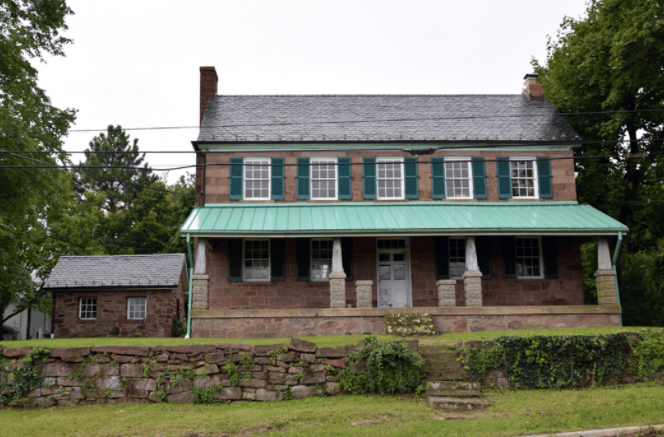
My Grandfather bought the farms located around the intersection of Rt 28 and Rt 107 in Dawsonville in 1930. He had emigrated from Germany in 1900 and married his distant cousin who was born in Grand Island, NE. He established a hotel in Washington, DC and had a farm near Takoma Park. My father inherited the farm in Dawsonville in 1936. My brother and I were raised on the farm. A lot of my friends were from families that came to Poolesville generations ago. My family was considered to be outsiders / foreigners. The farm was eventually sold in 2005 and remains in the Ag Reserve.
- What type of work/industry was your family involved with (if they were in the Ag Reserve)?
My father was a farmer and had a dairy from1932 to 1958. As a little girl, some of my fondest memories were riding on top of the milk truck and driving the trucks and tractors while helpers picked up and stacked hay bales. Later, my husband and I ran a pig farm, raising lots of feeder pigs for sale and for 4H projects.
- Describe the Ag Reserve when you were growing up here?
A bucolic home. I enjoyed walking down to Seneca Creek on our property, fishing, and swimming. Everybody knew one another near Poolesville. All of the local churches had events or bazaars bringing the community close. There was a Poolesville Community Fair that was well attended. Poolesville was the nearest school. When I started school there, all grades were in one building.
- Any interesting stories come to mind?
Before I was born, my parents ran a Beer Tavern on our farm. The building is still there and is a residence now. The county went ‘dry’ just before WWII, which closed the business as well as ones in Poolesville.
- Most prominent memory?
There was always an accident of some nature by the intersection in front of our house or flood occurring at the bridge on Rt. 28. My father said if he got 5 cents for every time he was called to pull a car from the creek, he’d be a millionaire.
- Contentious issues in the community?
When the school was integrated in 1957, my mother kept me home for a while. In hind sight, that was a mistake.
Some of our neighbors wanted an outer beltway to be built in the Ag Reserve. They hoped it would drive up property values.
- Typical activities with friends?
I had farm chores to do when I came home from school. Mostly that would be tending the chickens, working in the garden and feeding the calves. My best friends and I attended ballet lessons for a few years. We also were enrolled in dance classes at what is now the Poolesville Beer and Wine.
- Most influential place/shop/business in town?
In Dawsonville, it used to be Stang’s Store. The building is still there at the intersection of 107 and Sugarland Road. I still remember the big pot-bellied stove that was in the center of the store and getting Peppermint Patties from the glass case. It closed in the 1950’s and became the bus stop for the Dawsonville students.
My family also started the Citgo station at the intersection of Rt 28 and White Grounds Road. My brother and later Rudy Creggar and Maynard Burdette (C & B Service Station) ran the shop well into the 1980’s before it was closed. Most every day the Byrd Brothers would be holding conversations for most of the day with local folks.
- Describe school here in the Ag Reserve.
I attended Poolesville from Kindergarten to 10th grade. I finished High School at St John’s in Frederick. I enjoyed it. The classes were always small. The elementary teachers taught school there for years, like Mrs. Chiswell, Mrs. Pumphrey, Mr. Johnson and Mrs. White. I loved Mrs. White as we got to make string puppets as a class project. She wrote a book I still have called My Merry Marionettes.
- Local sports?
I attended Poolesville basketball games. Also, many of the farmers played baseball after milking. Imagine having Walter Johnson’s son in the field.
- Social activities?
There were some dances at the Pavilion of St Mary’s Church. A group of us would go to movies in Rockville. And there was the annual Beallsville Fireman’s Carnival.
- Transportation to/from school?
Johnny Allnutt was our bus driver for the Dawsonville route to Poolesville. Later, Ginger Bodmer Hoffacker’s mother was our bus driver.
- What jobs have you held here in the Ag Reserve?
My husband and I have volunteered to be on the Map Committee of the King Dairy Barn MOOSEUM in Germantown, Maryland, which is dedicated to interpreting the rich history of the dairy farms, the families, related organizations and businesses of Montgomery County, Maryland. The Map committee researches newspaper articles, deeds, and Ancestry, which combined, tells the story of a dairy farm. The Map Committee has documented 516 dairy farms that once existed in this county. In the past two years we have found 90 dairy farms that had not yet been documented and we have ten more to add in the near future. The MOOseum has a digital map of Montgomery County that has all of these farms marked. This map can be accessed on the website at the following link (https://www.mooseum.org/ . It has been a lot of work and extremely gratifying to tell a story of a family dairy from the late 1880’s to current.
- How did you get into that line of work?
My husband and I visited the MOOSEUM a couple of years ago and connected with staff members to document the story of my family farm. We knew of other farms and had access to internet resources to build other family histories.
- Biggest change in the Ag Reserve since you’ve been here?
Housing growth in Poolesville and along Peachtree Road. Land use diversity. More land is now devoted to horse farms in particular. There is only one Dairy farm left in the Ag Reserve. At one time there were over 500 Dairy’s in Montgomery County. Any way you look at it, you cannot make time stand still.
- Important politics of the Ag Reserve – what local topics did people talk about over the years?
The outer beltway came has up often. Redistricting / Gerrymandering as well. County inheritance taxes have also been a topic. The types of businesses have also been challenged, like the Dickerson Power station, solar panels, Boyds gravel quarry, and the composting facility. Quite a few NIMBY (Not in my back yard) issues.
- In 2080 the Ag Reserve will be 100 years old. What do you hope it looks like?
I hope we can keep this as country. I hope we can hike Sugarloaf Mountain or along the C&O Canal. I’d like to see agribusiness continue, albeit sod, orchard, and animal farms. I’d like to see children who live in urban communities have a chance to come to a farm and experience how to care for animals, like for 4H projects or to grow gardens.
- What do you think it will look like?
I imagine there will be more clusters of housing as owners of larger acreage will find a way to subdivide or break ownership to 5 to 10-acre estates. We’ve learned we can work from home during this Pandemic. I don’t think there will be an increase in demand for offices or shopping malls as we become more connected through telecommunication Apps.

