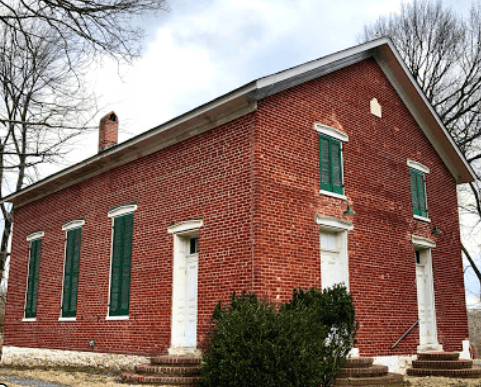
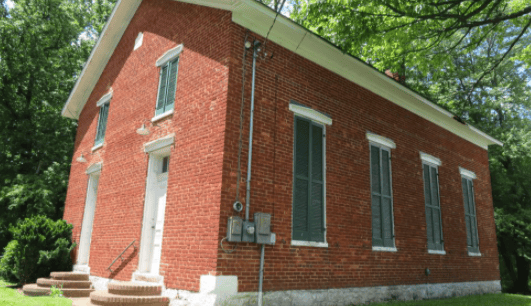
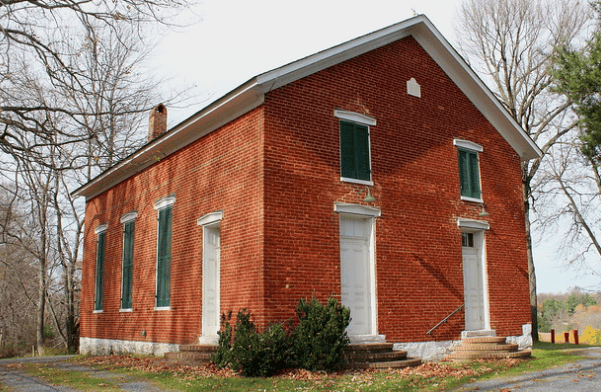
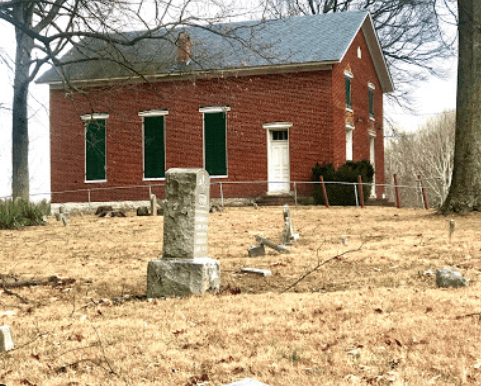
Sitting at the base of Sugarloaf Mountain, the Sugarloaf Mountain Chapel is relatively basic in architectural style and therefore easy to overlook. But this brick house of worship has an interesting history that is worth further review.
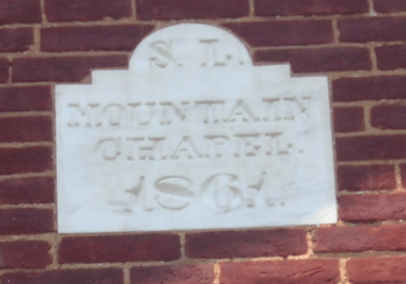
Completed in 1861 just as the Civil War was kicking off, the chapel is thought to have been the first structure built by William T. Hilton of Barnesville. Hilton was a prolific builder, and many of his structures (notably Mt. Ephraim and St. Mary’s Church) dot the countryside in and around Barnesville and Comus today. The chapel, built for a Methodist congregation, was constructed to replace an older structure at the site where the congregation had been worshipping since the 1780s – interesting when you consider that Methodism as a religion here in America would have been new at the time, with the Methodist Episcopal Church in America officially established in 1784.
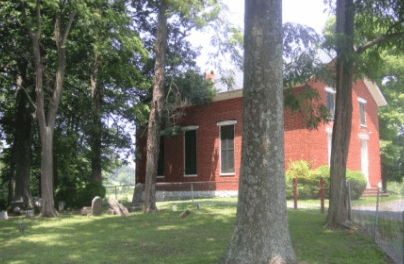
The structure was made with bricks fired in a local kiln and with a roof of slate that had been mined locally at the quarry along what is now Slate Quarry Road. Accompanying the church is a cemetery, consisting of around 75 graves marking the final resting place for local citizens – most from the 1800s.
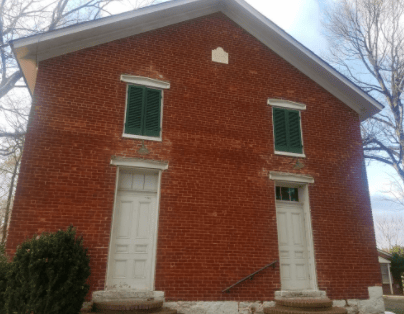
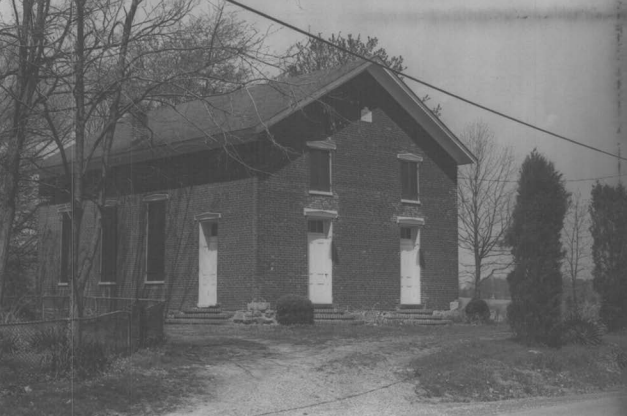
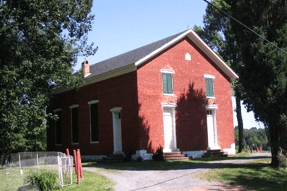
I’ve always wondered why the church has two front doors. While I don’t know for sure, my belief is that when the church was built, men and women sat on seperate sides of the church and entered through these separate doors – a practice that was common at worship services in the 19th century.
The Methodist congregation continued to use the chapel until the 1930s, when the congregation had shrunk to very small numbers. The site was then sold to the Holland Family, owners of land surrounding the church and long-time members of the congregation (you can find many Holland graves in the cemetery). Upon the death of George Holland in 1949, the church was sold to local farmer Francis Johnston.
An interesting newspaper article from 1965 depicts Johnston in an odd and frustrating situation – a farmer owning a church without a congregation. Despite his best efforts to attract a new congregation to use the church, Johnston appears to have been unsuccessful – likely due to the relatively remote nature of the church’s location.
Today the church does not appear to be in use, although there may be groups using the structure for special worship services on occasion. The next time you drive north out of Comus on Rt 109, keep your eyes on the left side of the road about a mile past the Comus Inn. You can’t miss it!

