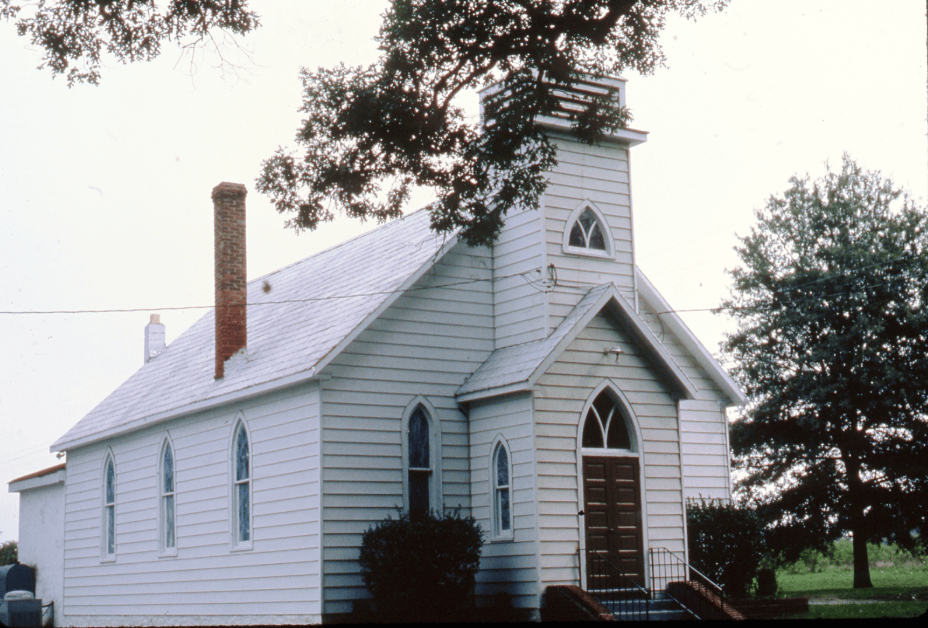
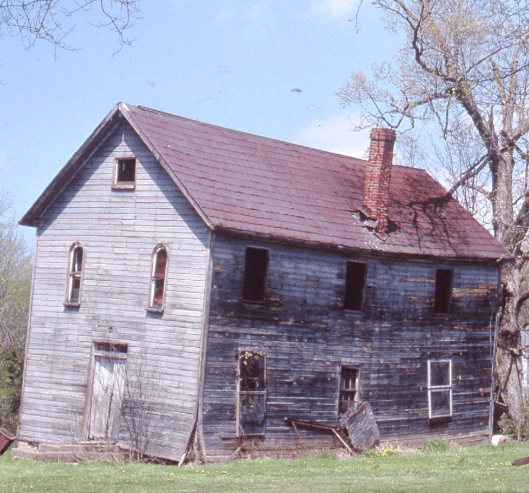
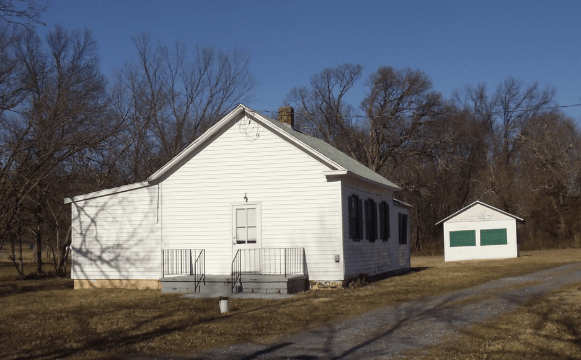
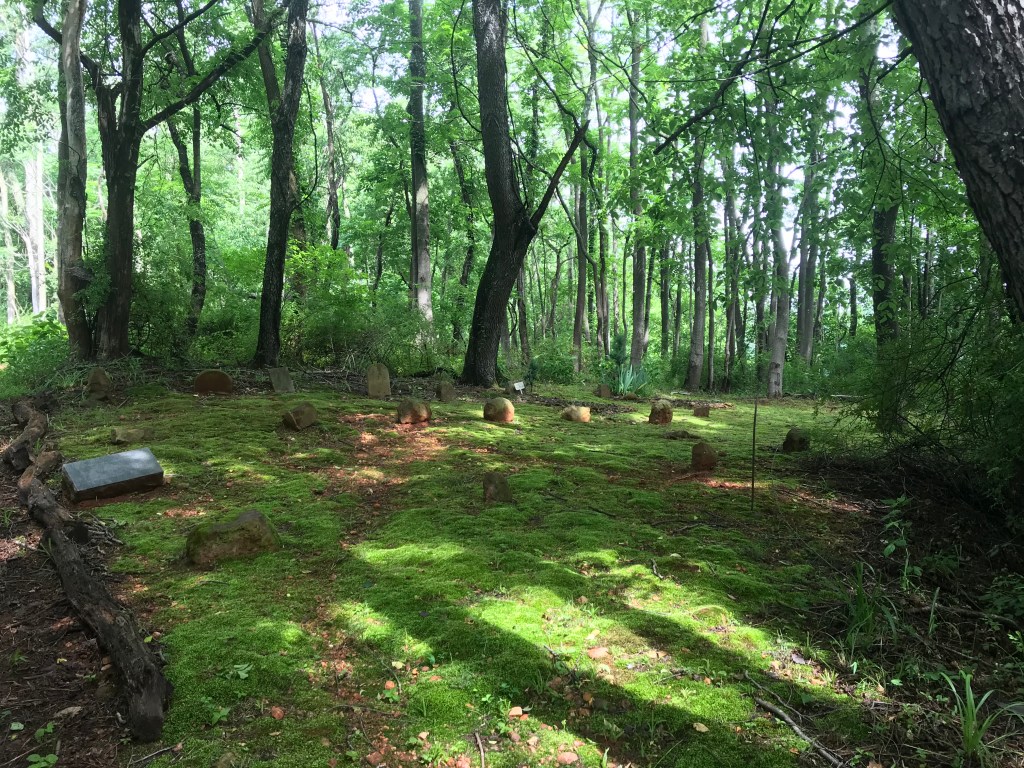
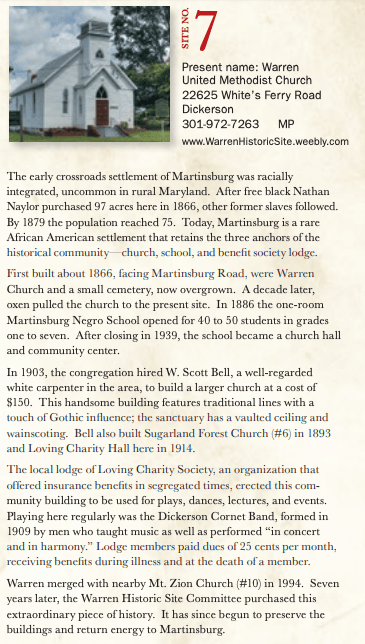
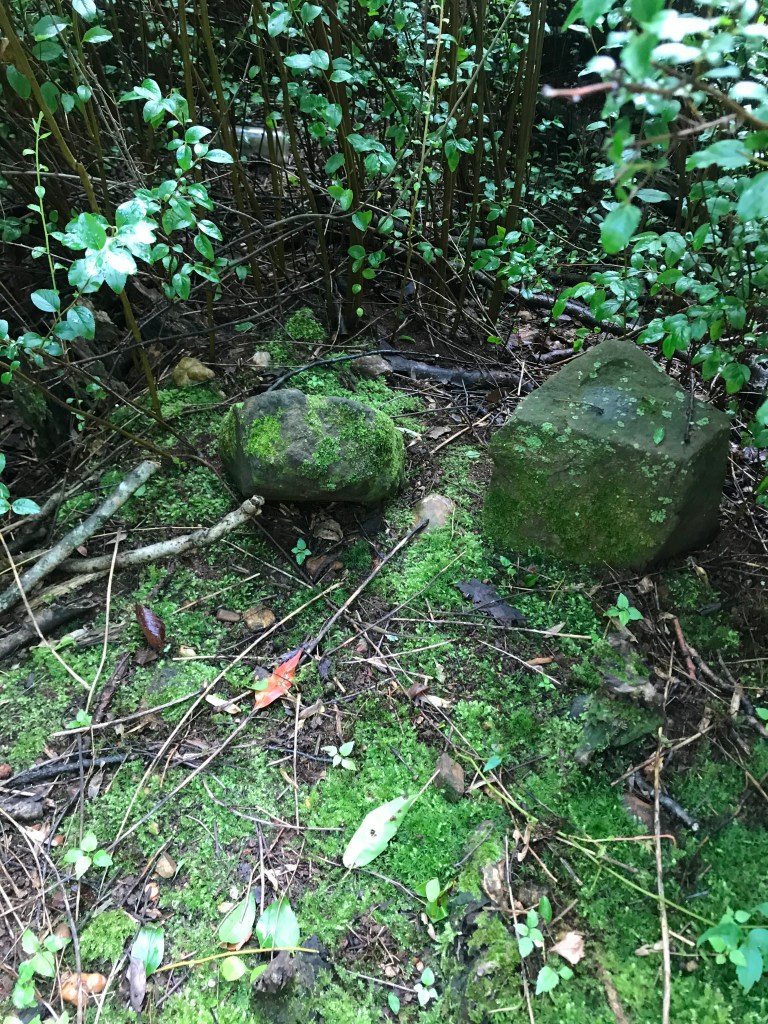
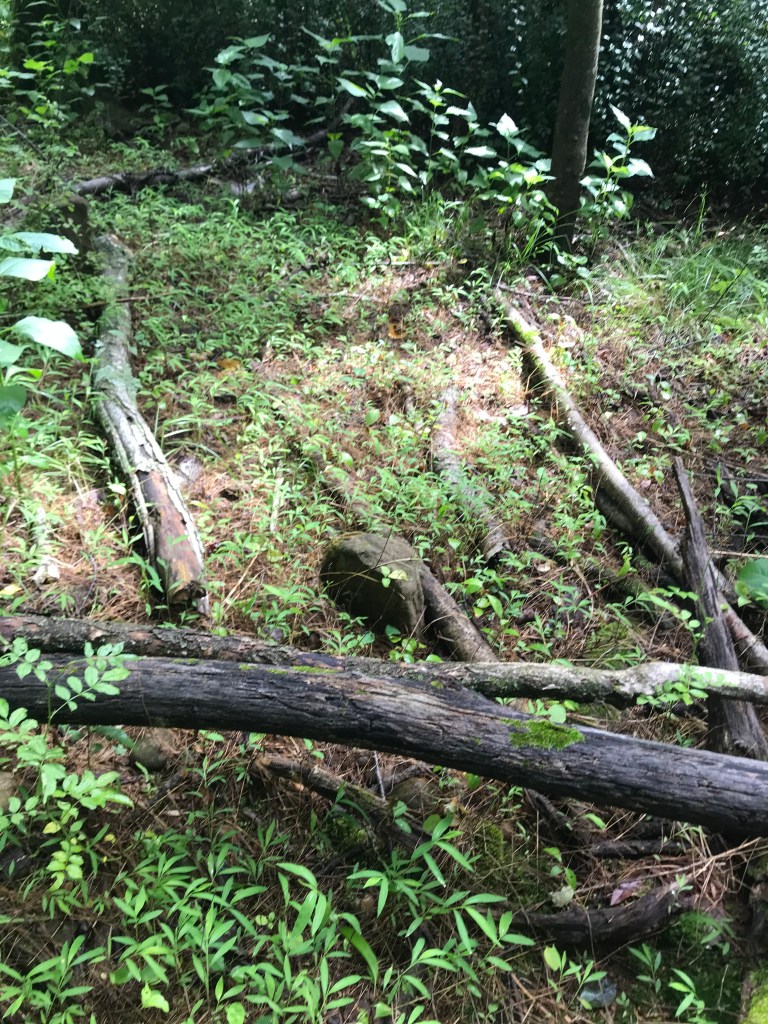
Recently, I spent the morning with Elsie Thomas, who leads preservation efforts at the Warren Historic Site on White’s Ferry Rd. Elsie showed me all three buildings at the site – the church, the school, and the charity hall – before taking me over to the historic cemetery, where multiple generations of African Americans from the Martinsburg area (some of whom spent parts of their lives enslaved) are buried. It was an eye-opening experience. In the coming weeks, I plan to organize a crew of people to travel to the historic cemetery to clean up some areas that have become overgrown, so please let me know if interested!
Normally I write up my own historic summary of these amazing places, but it’s clear that this is not my story to tell. So here is the write-up from Elsie: “The Warren Historic Site is a significant historic enclave that was once the center of an African American community called Martinsburg. It is located on White’s Ferry Road in western Montgomery County, at the intersection of Martinsburg Road, and is the last such site in the state of Maryland to retain all three of the structures that were the heart of flourishing African American communities of the late-nineteenth/early-twentieth century.
The Warren Historic Site is a designated historic district comprising of three key structures, the Warren UM Church (built in 1903), the one-room Martinsburg Negro School (built in1886), and the Loving Charity Lodge Hall (built in 1914). These buildings comprise what was the nucleus for most African American communities founded in Maryland following the end of the Civil War through the beginning of the twentieth century. The Warren Site is the last in Maryland to retain all three structures. While the church and school continue to be used, the Loving Charity Hall is in a dilapidated condition and is currently on Maryland’s list of Endangered Sites. As Montgomery County grows, the demands on housing dictate replacing farms and historic structures with new housing and so we are losing what remains of the historic landscape. The Warren Historic Site Committee has worked to save this last vestige of a dying community that speaks to the resilience and determination of a people who, having started with nothing, managed to create a once thriving community.
Following the Civil War, Montgomery County’s formerly enslaved residents found themselves, for the first time, free to worship as they pleased and educate themselves. In Martinsburg, a small crossroads community that had been bi-racial before the Civil War with free and enslaved African Americans living and working side by side with white masters and farm laborers, the freedom to worship was acted on with speed. Warren was one of many churches established by these newly freed people creating a clear and identifiable nucleus for many African American communities. The Warren congregation was formed immediately following the Civil War and, by 1866, the first church structure had been built. The first church site, and where the cemetery is still located, is about a mile from where the Warren buildings stand today. The church was moved to its current location on rollers in 1876. The existing church building replaced that original building in 1903. Emancipation did not always mean freedom. Many blacks had, from need, remained working for the same people who had formerly enslaved them, being without the financial means to improve their situation or the skills. For them, these churches provided an anchor that African Americans could look to with pride as something they had created. Most of these early communities are gone, but some of the churches remain and can be seen today, named for communities that have disappeared, having been absorbed by development or lost as residents moved away for better opportunities.
Once the church had been established, the next step was to educate their young. For the generations of blacks raised in slavery, education and the ability to read, write and calculate, were skills without which poverty was a certainty. As slaves, they understood they were prevented from getting an education as a way to keep them enslaved. Once freed, they knew the only way to pull themselves out of poverty and improve their lives was through education. At first, a public education was denied them. The public school system was not intended to provide an education for blacks and it was up to the African American community to make it happen. Already impoverished communities pooled their money to hire teachers and build schoolhouses. As with many other communities, Martinsburg’s young began school in the church building, in 1880, but the community was soon able to build the Martinsburg Negro School (later called the Elmer School) in 1886 and it is the oldest surviving African American school in the county. The one-room school served grades one to five, averaging forty to fifty students per school year. In 1899, the school was deeded to the Montgomery County Public Schools and remained in use until 1939. Even after the black schools were taken over by the county’s school system, black families were often responsible for raising a significant portion of the funds needed. Nothing was free. Inadequate as that education might seem to us today, it was very important leap forward for those who had come from slavery.
African Americans were also denied to insurance. African American benevolent societies were created to provide sick and death benefits. Many of these societies also built lodge halls to serve as community centers where social and educational activities could take place. The Loving Charity Hall, one of only two left standing in Montgomery County, was associated with a nationwide fraternal benefit society known as the General Grand and Accepted Order of Brothers and Sisters of Love and Charity. The Hall represents a rare type of late-nineteenth/early-twentieth century architecture. It was built in 1914 by a local carpenter, Scott Bell, who also built the Warren Church, and was the center of community events; movies, dances, plays, and other social occasions.
The Warren Historic Site Committee (WHSC) is dedicated to preserving the Warren Historic Site and the buildings that comprise this valuable historic resource – the Warren UM Church, the Martinsburg Negro School, and the Loving Charity Hall. The WHSC was formed in 1997. Prior to 1993, the Warren UM Church had an active, if diminishing, congregation. In 1993, the congregation merged with the Mt. Zion UM Church in Dickerson. Following the merger, a group of concerned former parishioners purchased the property with the intent of saving this valuable historical resource. WHSC oversees the site and holds regular fund raisers to help maintain the properties and keep them from continued deterioration. The buildings are still used for community events and weddings.”

